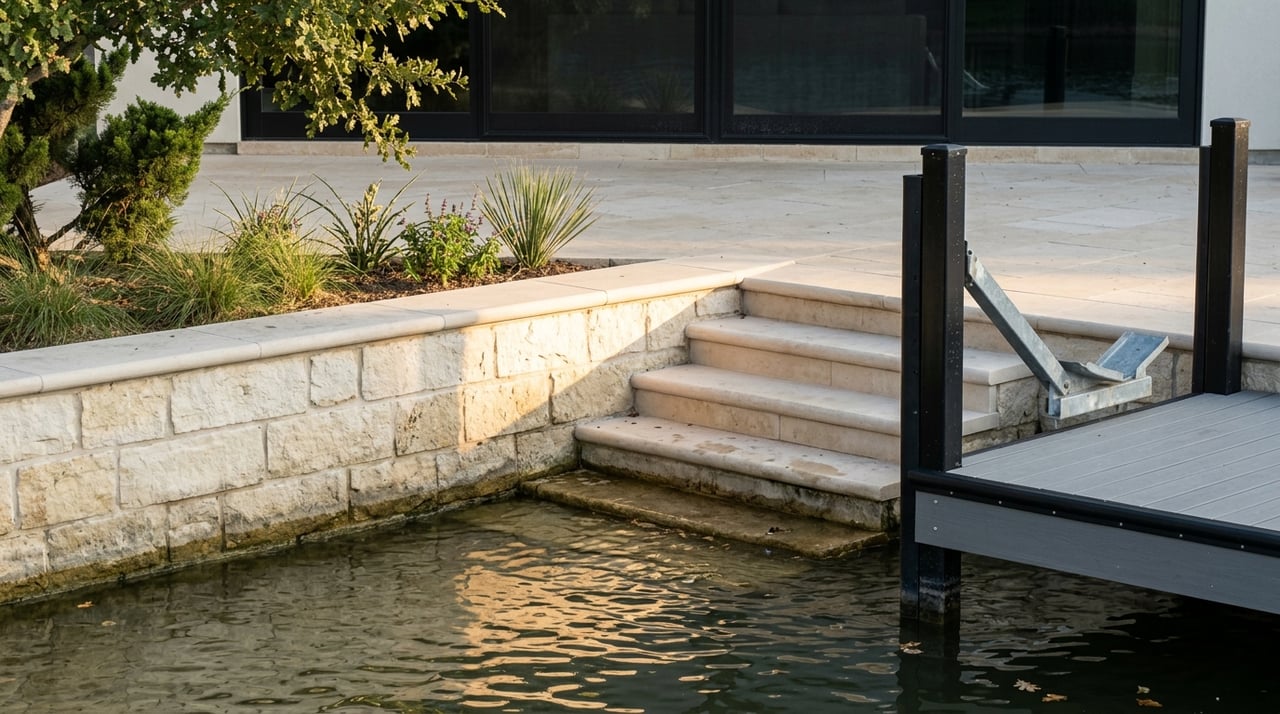
Buying on Lake LBJ can feel like a dream come true, but lakefront property in Kingsland comes with questions you do not want to answer after closing. If you are picturing weekend boat rides, dock days, or a future short-term rental, you also need to think about flood risk, shoreline rules, maintenance, and local taxes. The good news is that with the right due diligence, you can buy with more clarity and fewer surprises. Let’s dive in.
Lake Levels Matter More Than You Think
One of the biggest misconceptions about Lake LBJ is that it always stays the same. In reality, LCRA classifies Lake LBJ as a pass-through lake with a target operating range of 824.4 to 825.0 feet above mean sea level. During flood events, the lake can rise well above normal levels.
That matters because your buying decision should go beyond the house itself. You also need to understand shoreline elevation, bank stability, dock exposure, and how the lot may handle changing water conditions. A beautiful view does not automatically mean low maintenance or low risk.
LCRA also notes that Highland Lakes conditions can change quickly during floods. Fast-moving water, floating debris, and water-level swings are part of lake ownership planning. If you are buying in Kingsland, it is smart to look at the shoreline with the same care you give the floor plan.
Check Flood Risk Early
Flood due diligence should happen early in the process, not just when the lender starts asking questions. FEMA identifies its Flood Map Service Center as the official source for flood hazard maps, and those maps help lenders determine insurance requirements.
For you as a buyer, that means a Lake LBJ property should be checked against current flood data before you assume it is easy to insure or outside a flood-prone area. Even if the home has been used casually or seasonally, you still want to confirm how the property is mapped and what flood insurance may cost.
This step is especially important for waterfront homes where the lifestyle appeal can distract from practical risk. A home can still be a great fit, but you want a clear picture of the insurance and ownership costs before moving forward.
Understand Dock Rules Before You Buy
For many buyers, the dock is a major part of the value of a Lake LBJ property. On Lake LBJ, residential docks must meet LCRA safety standards for flotation, lighting, access, anchoring, and distance from shore. The maximum dock extension is 50 feet from the shoreline, and an additional 40 feet of lake access must remain open.
LCRA does not require a permit, registration, or fee for residential docks that are 1,500 square feet or less. Still, that does not mean every property is automatically ready for a dock. Owners must own or have permission to use the submerged land under a fixed dock and the underwater anchoring area for a floating dock.
This is where surveys and property rights become very important. Before closing, you want to verify what rights come with the property and whether an existing or future dock setup actually complies with the rules.
Not Every Lot Works for a Dock
Some Kingsland-area lots may look dock-friendly at first glance but have real limitations. LCRA says some shoreline areas are unsuitable because of shallow water, narrow coves, rocky terrain, or other hazards.
LCRA also does not decide private property-rights disputes about dock placement. On top of that, HOA or POA rules may be more restrictive than LCRA standards. If a dock is part of your plan, make sure you are reviewing both the physical site and any private community rules.
Floating Docks Need Extra Scrutiny
If the property has a floating dock, or you plan to add one, pay especially close attention. LCRA states that floating docks are at higher risk than fixed and recessed docks during floods.
LCRA recommends working with a qualified dock contractor, and dock owners are responsible for damage if a dock breaks loose or becomes a navigation hazard. For part-time owners or second-home buyers, this can be a bigger issue than expected because lake conditions can change while you are away.
Shoreline Work Can Trigger More Rules
Some buyers assume they can buy a lake lot and later reshape the shoreline, clear the lakebed, or improve the waterfront without much red tape. In reality, the permitting picture can expand quickly depending on the work.
According to LCRA, lakebed clearing that disturbs sediment may require notification or permits. Projects involving more than 500 cubic yards of dredging or more than 500 linear feet of shoreline disturbance require an individual Tier II HLDO permit.
LCRA also says its Highland Lakes Watershed Ordinance applies to certain development in a portion of Llano County. That can trigger permits for land disturbance over 1 acre or impervious cover over 10,000 square feet. If you are buying with renovation or expansion plans, this is worth checking before you commit.
Plan for Ongoing Lakefront Maintenance
Lakefront ownership usually comes with more maintenance than a non-waterfront home. That does not make it a bad investment or a poor lifestyle fit, but it does mean your budget should reflect the reality of ownership.
LCRA recommends keeping docks close to shore, securing anchors properly, removing loose items, replacing damaged cables, and encasing flotation foam to reduce flood damage. These are not one-time concerns. They are part of regular waterfront upkeep.
If you will not live at the property full time, maintenance planning becomes even more important. LCRA notes that part-time residents may want to rely on a qualified dock contractor because lake levels and flood conditions can change when the owner is not on site.
Vegetation and Water Conditions Add Costs
Shoreline ownership can also bring recurring vegetation management. LCRA offered rebates in 2026 for invasive aquatic vegetation management on Lake LBJ and noted the discovery of rockstar eelgrass in the Highland Lakes system.
That tells you something important as a buyer. Waterfront ownership can include ongoing shoreline and vegetation management, not just mowing the yard and enjoying the view.
LCRA also advises lake users to avoid cloudy, murky, or scummy water and algae mats. Natural waters are not chlorinated or disinfected, so while the lake is a major lifestyle benefit, it is not a zero-maintenance environment.
Verify Septic and Utility Details
Some lake-area homes may fall under LCRA on-site sewage rules. LCRA says it regulates on-site sewage facilities within a 2,200-foot zone around the upper Highland Lakes.
If the Kingsland property you are considering uses septic, verify the system history, inspection status, and any continued-use requirements before closing or remodeling. This matters not only for your current use of the home, but also for future repairs, additions, or updates.
For buyers looking at older homes, second homes, or properties with guest accommodations, this step is especially important. Septic questions are much easier to address before closing than after move-in.
Think Carefully About Rental Income Plans
A Lake LBJ home in Kingsland may look like a strong vacation-rental opportunity, but you should run the numbers carefully. In Texas, short-term rentals are stays of 29 days or less. The state hotel occupancy tax rate is 6%, and Llano County imposes a 4% hotel occupancy tax outside municipal limits.
Llano County also includes cleaning fees and pet fees in taxable receipts. So if you are building an income plan around short-term rentals, you need to account for more than the nightly rate.
The Texas Comptroller also notes that while some booking platforms may collect and remit state hotel occupancy tax, local hotel-tax compliance still needs to be checked with the county or city where the property is located. In other words, platform collection does not automatically cover all owner responsibilities.
Mixed Personal and Rental Use Gets Complicated
If you plan to use the home personally and rent it out part of the year, your bookkeeping needs to be organized from the start. IRS Publication 527 explains that rental income and expenses must be separated from personal use and discusses vacation homes, depreciation, and casualty losses.
That does not mean a mixed-use lake property is a bad idea. It just means you should go in with a realistic system for tracking income, expenses, and use.
A better investment analysis should also include vacancy, cleaning, dock service, shoreline upkeep, septic maintenance, insurance, and any HOA or POA dues. A lake property can still perform well, but it rarely cash flows cleanly if you underestimate the ongoing cost stack.
Key Questions To Ask Before Closing
Before you move forward on a Lake LBJ property in Kingsland, make sure you can answer these practical questions:
- Does the survey clearly show the shoreline, easements, and rights tied to the dock area?
- Can the existing or planned dock comply with the Lake LBJ 50-foot extension limit and 40-foot access rule?
- Is the home in a FEMA flood zone, and what will flood insurance actually cost?
- Does the property use septic, and if so, is it current under applicable LCRA rules?
- Do HOA or POA rules limit rentals, dock types, or shoreline improvements?
- If you plan to rent the home, have you accounted for state and county hotel occupancy tax registration and reporting?
These questions may not be as exciting as sunset views and boating access, but they are often what separates a smooth purchase from an expensive surprise.
Why Local Guidance Helps
Lake property is different from a standard residential purchase. In Kingsland, you are not just evaluating square footage and finishes. You are also weighing shoreline conditions, dock compliance, insurance questions, maintenance expectations, and sometimes rental planning.
That is why local, hands-on guidance matters. When you work with someone who understands lifestyle properties and the details that come with them, you are more likely to spot issues early, ask better questions, and move forward with confidence.
If you are considering buying on Lake LBJ in Kingsland, Teresa Byrn can help you navigate the details, compare properties thoughtfully, and make sure your lakefront purchase fits your goals.
FAQs
What should you know about Lake LBJ water levels before buying in Kingsland?
- Lake LBJ is a pass-through lake, not a true constant-level lake, so buyers should evaluate shoreline elevation, bank stability, and dock exposure along with the home itself.
What dock rules apply to Lake LBJ property in Kingsland?
- LCRA says residential docks on Lake LBJ must meet safety standards, can extend up to 50 feet from shore, and must leave 40 feet of lake access open.
What flood-risk step should Lake LBJ buyers take before closing?
- Buyers should check the property against FEMA flood maps early so they can better understand flood-zone status and possible insurance requirements.
What septic questions matter for Kingsland lake homes?
- If the property uses septic, you should verify system history, inspection status, and any continued-use requirements before closing or remodeling.
What should you know about short-term rental taxes for Kingsland property?
- In Texas, short-term rentals are stays of 29 days or less, with a 6% state hotel occupancy tax and a 4% Llano County hotel occupancy tax outside municipal limits.
What extra costs should you expect with a Lake LBJ home?
- Buyers should budget for items like dock maintenance, shoreline upkeep, vegetation management, insurance, septic service, cleaning, and possible HOA or POA dues.
