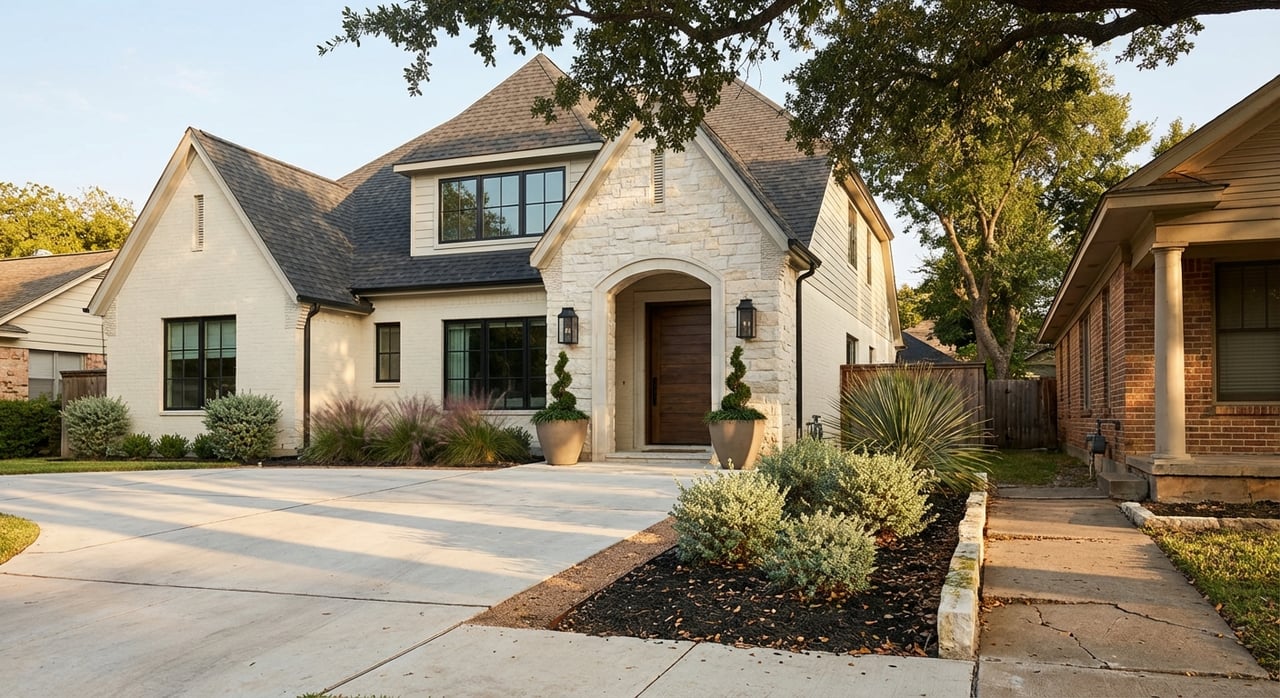
Should you buy a shiny new build or a well‑kept resale in Liberty Hill? With rapid growth reshaping the area, both paths can be smart. You want clarity on costs, timing, warranties, and future resale appeal before you decide. In this guide, you’ll learn how new construction compares to resale here, what incentives and timelines to expect, and how to avoid common pitfalls. Let’s dive in.
Why Liberty Hill is booming
Growth and momentum
Liberty Hill’s growth has accelerated in recent years. According to U.S. Census QuickFacts, the city’s estimated population reached 11,984 as of July 1, 2024, up from about 3,646 in 2020. That is a dramatic increase and a key reason you are seeing new communities, services, and amenities arrive across the 183 and SH‑29 corridors (U.S. Census QuickFacts).
Commute access and 183A extension
Transportation improvements shape where builders build and how buyers weigh commute times. The 183A Toll Phase 3 project extends north of Leander toward Highway 29, improving access to Liberty Hill. This expansion has influenced where new subdivisions are planned and can boost future resale appeal for homes with easy toll access (Community Impact report on 183A Phase 3).
New construction in Liberty Hill
Communities, builders, and price tiers
If you are focused on new builds, Lariat stands out as a major master‑planned community within Liberty Hill. Multiple reputable builders offer a range of lot sizes, commonly 50‑, 60‑, and 80‑foot product lines. As a general guide, some 50‑foot series homes have started in the low $400Ks, while larger lots and plans can reach into the high $600Ks and $700Ks. Exact pricing varies by builder, lot, plan, and selected options.
Quick‑move homes and incentives
Many Liberty Hill builders carry spec or quick‑move inventory. Incentives are common and can be meaningful. Recent local examples have advertised as much as $31,000 toward closing costs or interest‑rate buydowns on quick‑move homes. Promotions change often, and some require use of the builder’s preferred lender, so you should verify current offers before you write an offer.
Resale homes in Liberty Hill
What you gain with a resale
Resale homes offer move‑in speed, established streetscapes, and predictable neighborhood patterns. You can see landscaping maturity, typical traffic at different times of day, and recent comparable sales. That can support easier appraisals and help you understand short‑term resale potential. You may also find unique features, upgrades, or lot characteristics that would be expensive to replicate in a new build.
Price signals to consider
Listing medians in Liberty Hill often differ depending on the boundary a portal tracks. For example, recent snapshots have shown different figures for the city versus ZIP 78642 because each platform uses its own data set and map line. The key is to pick one boundary and source, then track it consistently. Your agent can help you decide whether to follow city limits, ZIP 78642, or a specific subdivision trend so your comparisons stay apples to apples.
Head‑to‑head: new vs resale
Price and effective cost
Upfront sticker price for new construction often sits above many older resale comparables on a per‑square‑foot basis. The real question is your effective first‑year cost. Builders have narrowed the “new‑home premium” in recent years through base‑price adjustments and incentives, and new homes can reduce near‑term out‑of‑pocket costs with lower maintenance and modern energy performance. Industry research points to this narrowing effect and evolving buyer preferences, which you can use to structure a true apples‑to‑apples comparison of total cost in year one (NAHB buyer trends and design insights).
Pro tip: ask your agent to model monthly payment with and without a rate buydown, plus estimated utilities, routine maintenance, and insurance for each property. That view often changes which option looks best.
Timeline and move‑in speed
- Resale: Once under contract, most resale closings land in about 30 to 60 days, subject to financing and inspection timelines.
- New construction: A ground‑up build typically takes about 6 to 12 months from contract to close, depending on permits, weather, and selections. Quick‑move inventory can close much faster, similar to resale. If your move date is firm, resale or a finished spec may fit best (How long a build typically takes).
Warranties and protection
New homes commonly include tiered warranties, often described as a 1‑2‑10 structure. The general pattern is one year for workmanship and finish items, two years for systems like HVAC, plumbing, and electrical, and 10 years for major structural components. Coverage and providers vary, so read the booklet, understand exclusions, and note how to file claims and by when (Overview of new‑home warranty structures).
Resale homes do not come with a builder warranty by default, though you can purchase a third‑party home‑warranty plan for certain systems and appliances. In both cases, keep careful records and complete independent inspections to preserve your options.
Finishes and customization
- New construction: If you contract early enough, you can select cabinets, counters, flooring, and fixtures. Keep in mind that upgrades are priced by the builder and can add quickly to the base price. A knowledgeable agent can help you weigh which upgrades deliver value and which ones are better tackled after closing.
- Resale: What you see is what you are buying. You can negotiate repairs or seller credits, then plan renovations on your own timeline. Build in a realistic budget for updates if you want to refresh surfaces soon after closing.
Neighborhood maturity and amenities
New master‑planned communities in Liberty Hill market a strong amenity mix. Pools, trail networks, pocket parks, and on‑site or nearby planned schools can be attractive, especially as Liberty Hill ISD brings new campuses online. LHISD is working on additional capacity, including a ninth elementary school scheduled to open in 2027, and it updates attendance boundaries as new schools come online. If school assignments matter to you, confirm the latest maps before you sign a contract (LHISD’s ninth elementary plans).
Established resale neighborhoods offer immediate maturity. You can see how yards, tree canopy, and traffic feel today, and you can reference a longer trail of comparable sales.
HOA, taxes, and utilities
Most master‑planned communities in Liberty Hill have homeowners associations with design standards and amenity upkeep. Fees and rules vary by subdivision and lot type, so review the HOA disclosure carefully. Property taxes are a major factor in your monthly payment. City‑level aggregations can give a general sense of typical tax burdens, but always verify your specific parcel’s assessment and tax rate with Williamson County before finalizing your budget (Liberty Hill city profile and tax context).
Inspections you should not skip
Even new homes need independent inspections. Municipal code inspections do not replace a third‑party inspector working for you. Schedule a pre‑drywall inspection to catch framing, plumbing, and electrical items before walls are closed, a final inspection before closing, and a warranty walk‑through near month 10 or 11 to address any lingering items within your coverage window (Recommended inspection phases).
How your agent adds value
A hands‑on local advisor changes your net outcome, especially with new construction. Here is how a trusted agent helps you in Liberty Hill:
- Interprets market snapshots using the right boundary, such as city limits, ZIP 78642, or a specific subdivision, so your price comparisons stay consistent over time.
- Surfaces and negotiates builder incentives, including rate buydowns, closing‑cost credits, and design allowances, then compares net cost across options.
- Reviews builder contracts and addenda, tracks upgrade pricing, and protects your timeline with clear expectations on milestones and delays.
- Coordinates independent inspections at pre‑drywall, final, and 10 to 11 months, then documents punch lists to preserve warranty claims (Inspection timing guidance).
- Verifies HOA documents, planned amenities, and the timing and funding of future phases.
- Checks LHISD boundary changes and planned school openings that could affect your lot’s assignment (Local reporting on new campuses).
A quick decision checklist
Use this to compare a specific new build with a resale home you like:
- Budget and monthly payment: Compare with and without incentives, plus estimated utilities, maintenance, and insurance.
- Timing: Identify your must‑move date. If you need a fast close, focus on resale or quick‑move new homes.
- Location and access: Weigh proximity to SH‑29 and the 183A corridor. Consider how that affects daily life and future resale appeal (183A expansion context).
- Features and finishes: List non‑negotiables, then estimate the cost of upgrades or renovations to achieve them.
- Warranties and risk: For a new build, read the 1‑2‑10 warranty details. For resale, consider a third‑party plan if it fits your needs (New‑home warranty overview).
- HOA and taxes: Confirm fees, rules, and your estimated tax bill for the exact property.
- Schools: If important to you, confirm current LHISD boundaries and any proposed rezoning before you commit.
- Inspections: Plan pre‑drywall and final for new construction, and a general inspection for any home you buy (Inspection best practices).
The bottom line
Both new construction and resale homes can be excellent choices in Liberty Hill. New builds offer modern design, energy performance, and strong warranties, along with incentives that can lower your effective cost. Resale homes deliver speed, mature neighborhoods, and immediate clarity on community patterns. The best decision comes from comparing total cost, timing, location, and the features you value most.
If you want a local, hands‑on partner to help you compare real numbers, negotiate incentives, and manage the details from contract to close, reach out to Teresa Byrn. You will get straightforward guidance and a smooth path to your next chapter.
FAQs
Is new construction more expensive in Liberty Hill?
- It depends on the community, lot size, and incentives. Some 50‑foot product lines have started in the low $400Ks, while larger lots and plans can reach the high $600Ks and $700Ks. Your effective cost can narrow once you account for incentives, lower near‑term maintenance, and modern energy performance.
Will Liberty Hill builders negotiate on price or terms?
- Often yes. Many are offering rate buydowns, closing‑cost credits, and design allowances, especially on quick‑move inventory. Promotions change quickly and may require the builder’s lender, so ask for current offers and have your agent negotiate the full package.
How long does a new home take to build in Liberty Hill?
- A typical ground‑up build runs about 6 to 12 months, depending on permits, weather, and selections. Quick‑move homes can close much faster, sometimes on a resale‑like timeline (Typical build timeframes).
Do I still need an inspection on a new build?
- Yes. Schedule pre‑drywall and final inspections, then plan a warranty walk‑through near month 10 or 11. City code inspections do not replace a third‑party inspector who represents your interests (Inspection phases to request).
What warranties come with a new home?
- Most builders provide tiered coverage similar to a 1‑2‑10 structure: one year on workmanship and finishes, two on major systems, and 10 on structural components. Read the booklet, note exclusions, and follow the claim process and timelines (New‑home warranty overview).
How do new schools and rezoning affect my purchase?
- School boundaries can shift as Liberty Hill ISD opens new campuses, including a ninth elementary school planned for 2027. Always confirm your lot’s current assignment and any proposed changes before you sign a contract (Local reporting on LHISD growth).
